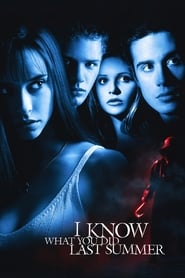
In “I Know What You Did Last Summer 1997,” a group of teens who accidentally hit a stranger with their car and dump his body into the ocean.
A year later, they start receiving mysterious messages from someone who knows their secret.
As they try to uncover the truth, they are hunted by a mysterious figure wearing a slicker raincoat and wielding a hook.
The movie is a classic slasher flick that keeps you on the edge of your seat until the very end.
CLICK HERE⭭⭭⭭🎬_Watch I Know What You Did Last Summer 1997 English Subtitles_
Review
I know what you did last summer, and I’m not talking about your beach vacation or road trip. I’m referring to the iconic 1997 horror movie of the same name, which still haunts and delights audiences more than two decades later. As someone who loves both psychological research and scary stories, I couldn’t resist exploring the deep currents of fear, guilt, vengeance, and resilience that flow through this tale of four friends who accidentally hit a man with their car and decide to cover up their crime. Warning: spoilers ahead for those who haven’t watched the movie yet (though honestly, it’s been out since before some of you were born).
First things first: What makes this movie resonate with so many viewers, despite its flaws and clichés? For one thing, it taps into our primal fear of being stalked by a vengeful killer who knows all our secrets. The premise echoes classic slasher films like Halloween or Friday the 13th but adds a twist of mystery as we try to guess who among the suspects is the masked figure clad in slicker and boots. The cinematography blends eerie landscapes (courtesy of North Carolina’s coast) with ominous close-ups of fishhooks, knives, letters, and blood stains. But what elevates this movie from mere gore fest to gripping thriller is its focus on character development and emotional stakes.
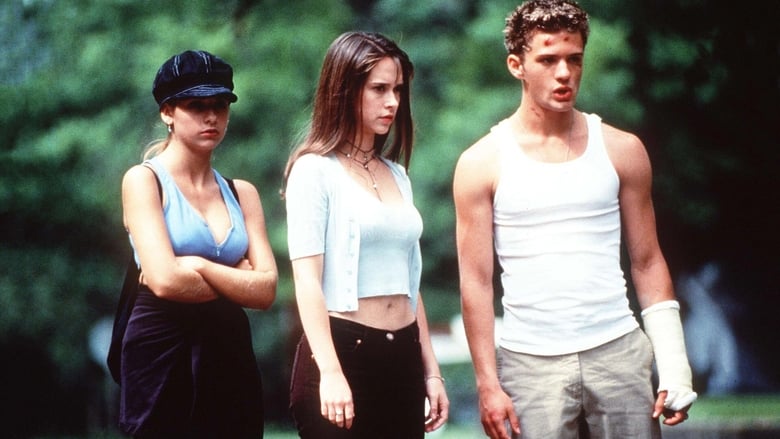
The main quartet comprises Julie James (Jennifer Love Hewitt), Ray Bronson (Freddie Prinze Jr.), Helen Shivers (Sarah Michelle Gellar), and Barry Cox (Ryan Phillippe), all recent high school graduates facing divergent paths in life. Julie dreams of becoming a writer but feels guilty about leaving her hometown behind after her boyfriend dumped her for college; Ray wants to pursue his passion for fishing but struggles with reconciling his love for Julie with his awareness that she cheated on him; Helen aspires to become a beauty queen and escape her trailer park roots but feels insecure about her fading looks and her boyfriend’s wandering eyes; Barry aims to be a football star and rich businessman but resorts to bullying and cheating to maintain his dominance over others. Each of them embodies a common flaw or trauma that resonates with us: Julie’s survivor guilt, Ray’s self-doubt, Helen’s vanity, Barry’s arrogance.
Their personalities collide on the Fourth of July party, where they drink, dance, argue, flirt, and ultimately decide to drive home despite being tipsy. On the way back, they hit a man who seems dead at first but then jumps up and attacks them with a hook before falling off the cliff. They debate whether to report the accident or bury the body and swear not to speak of it again. One year later, while they are trying to move on with their lives but still haunted by their secret, they receive ominous messages that proclaim “I know what you did last summer” and begin facing deadly encounters from an unknown assailant who wears a slicker like the one they saw on the night of their crime.
From here on out, the movie unfolds as a series of suspenseful set pieces that showcase both the strengths and limitations of its plot. On one hand, it keeps us guessing about who could be behind the stalking spree: Is it Max (Johnny Galecki), Julie’s classmate who harbored a crush on her? Is it Elsa (Bridgette Wilson-Sampras), Barry’s former girlfriend whom he dated before Helen? Is it Ben Willis (Muse Watson), father of David Egan (the man they hit) who supposedly drowned while fishing? Or is it someone else entirely? The movie also throws in various red herrings such as creepy fishermen, record stores clerks, abandoned hospitals or corpses in trunks.
On the other hand, some scenes stretch our credulity or logic, such as the famous hair salon sequence where Helen is locked in a tanning bed and forced to watch a video of her being crowned Miss Croaker Queen (yes, that’s a thing). Or the chase scene where Barry gets trapped in a store and tries to fight off the killer with an ice pick while wearing an apron. Or the climax where Julie and Ray confront the killer on his boat and discover his true identity while dodging hooks and fighting for their lives. Some of these sequences border on camp or absurdity, but they also provide some cathartic release from the tension or sadness that permeate other parts of the movie.
Speaking of those parts, let’s delve into some of them. One of the strongest aspects of I Know What You Did Last Summer is its portrayal of guilt and trauma. The characters may seem shallow or privileged at first glance, but as we learn more about their pasts and present struggles, we start to empathize with them and care about their fates. Julie’s arc is perhaps the most poignant: she blames herself for not stopping the car when they hit David, even though it was dark and raining; she feels guilty for not persuading her friends to come forward, even though they all shared equal responsibility; she regrets not being honest with Ray about her panic attacks and fears that stem from her sister’s suicide. Her nightmares blend snippets from her memories with surreal imagery that reflects her inner turmoil: waterfalls turning into blood, confessional booths becoming coffins, dead bodies coming alive.
Ray also has his share of doubts and regrets: he resents Julie for cheating on him but still loves her enough to help her when she needs it; he worries that fishing is a dead-end career but fears losing his connection to nature; he seeks closure about his father’s death but struggles with talking to his mother or trusting Julie with his pain. Helen is less fleshed out than Julie or Ray, but still gets some poignant moments, such as her conversation with Julie about how beauty fades and how hard she worked to get where she is. Her death scene is also one of the more brutal and shocking in the movie, partially due to its graphic violence and partially due to our emotional investment in her arc.
Barry is perhaps the least sympathetic of the group, but he still deserves some credit for his character development. He starts out as a macho jerk who bullies both his friends and his girlfriend, but as he becomes aware of the stakes involved in their secret, he shows some vulnerability and remorse. His encounter with Ben Willis at the gym reveals that he wasn’t always a bully; in fact, it was Barry who stood up for David Egan when Max and others teased him about his stutter. This moment adds a layer of complexity to Barry’s persona and makes us question whether he is redeemable or not.
The cast does a decent job overall with their roles, though none of them stands out as a top-tier performer. Hewitt brings some warmth and spunk to Julie while showcasing her ability to cry on cue; Prinze Jr. exudes some charm and sensitivity as Ray while playing it cool most of the time; Gellar radiates both beauty and brains as Helen while conveying her fear and desperation in some key scenes; Phillippe portrays Barry with enough swagger and intensity to make us believe he could be both popular and feared. They also share some witty banter that lightens up the mood occasionally: “You’re just too good for me Julie,” Ray tells her at one point. “Am I supposed to like beg you not to go?” “No,” Julie replies, “you’re just supposed to kiss me.”
The secondary characters vary in quality from forgettable (the sheriff) to annoying (Max) to memorable (Anne Heche as Missy Egan). The latter has only a couple of scenes, but her performance as a grieving mother who lost both her son and husband within weeks is haunting and heart-wrenching. Her monologue about how she still hears David’s voice in the wind, or how she wishes she could see him once more to tell him she loves him, brings a chill to our spines and a tear to our eyes. She represents the collateral damage of the main characters’ mistake, and her inclusion adds another layer of tragedy to the story.
The dialogue in I Know What You Did Last Summer ranges from witty to cheesy to clunky, often within the same scene. Some lines elevate the tension or characterization, like when Barry admits “I don’t want anyone to know what we did last summer!”, or when Ray asks “What are you waiting for? It’s July 4th!”. Other lines make us roll our eyes or cringe, like when Helen tells Julie “You’re like ride or die Xena meets wholesome Brady” (what does that even mean?), or when the killer taunts Ray with “What are you waiting for? You wanna be next?” (uh, no thanks). The best line of all may be Julie’s final confrontation with the killer: “What are you waiting for? Huh? What are you waiting for?” This echoes her earlier conversation with Ray where he asks her why she didn’t tell him about her nightmares and she replies “I was waiting for you”. The repetition highlights Julie’s growth and agency throughout the movie as she goes from helpless victim to resourceful survivor.
The score by John Debney blends suspenseful strings, moody piano notes, and haunting choral voices into an effective complement to the visuals. It relies heavily on crescendos and stingers that signal each scare or reveal, but also includes some quieter moments that add emotional depth to certain scenes. The use of pop songs from various artists such as Kula Shaker, Type O Negative, and The Offspring may date the movie a bit but also create a nostalgic vibe for those who grew up in the late 90s. The opening credits sequence combines a remix of Hush by Kula Shaker with shots of rustling cornfields, colorful fireworks, and menacing waves to set the mood for what’s to come.
The filming of I Know What You Did Last Summer faced some challenges due to the unpredictable weather and other factors. Director Jim Gillespie had to improvise several scenes and reshoots due to rain or fog that ruined some takes or obscured some elements. He also had to balance between two modes of horror: the traditional slasher formula that requires graphic violence and gratuitous nudity (which Gillespie allegedly reduced) and the psychological suspense that requires more subtlety and restraint. Some critics found fault with his direction or pacing, while others praised his ability to build tension and atmosphere. One notable choice he made was to emphasize the hook as a symbol of both fear and guilt: we see it repeatedly throughout the movie, from the opening scene where Barry uses it as a fishing tool, to the climax where it becomes both weapon and metaphor for Julie’s liberation.
The production design merits some praise too, especially in terms of creating distinct settings for each part of the story. The beach party scenes convey both excitement and ennui, with neon lights, loud music, bonfires, hot dogs, beer cans scattered around on sand dunes or in abandoned buildings. The rural landscapes contrast sharply with this party scene: we see vast cornfields stretching out under moody skies, old-fashioned bridges over dark creeks or ponds filled with rotting fish. The hair salon is perhaps one of the most memorable locations thanks to its garish colors (pink!), bizarre equipment (tanning beds that look like coffins!), and creepy atmosphere (multiple mirrors reflecting distorted images!).
The special effects in I Know What You Did Last Summer range from impressive to silly, depending on the scene and the era. The car accident scene looks fairly realistic, though the puppet used for David’s corpse is a bit too obvious. The hospital sequence has some decent prosthetics work for the creepy orderly and the disfigured corpse, though they pale in comparison to later horror movies that would push the envelope further. The boat scenes rely heavily on practical effects such as explosions, water tanks, and flammable liquids rather than CGI, which gives them a more tactile feel but also limits their scope. The chase scenes often use jump cuts or tracking shots to create a sense of speed and urgency, but sometimes linger too long on a character’s face or abdomen being slashed.
The development of I Know What You Did Last Summer from script to screen involved several changes that affected both the plot and the tone. Originally based on Lois Duncan’s novel of the same name from 1973, which focused more on supernatural elements and had a different ending, the screenplay written by Kevin Williamson (who would go on to create Scream) underwent some revisions that emphasized moodier themes such as survivor guilt, identity crises, and broken relationships. Several characters’ names were changed as well: Julie was originally named Suzie (which might have led to confusion with Scream’s Sidney?), Ray was originally named Davey (which might have been too close to David Egan), Helen was originally named Karla (which could have been too generic), and Barry remained itself.
Williamson also added some meta elements to the script that mirrored his own experiences as an aspiring writer who moved from small-town North Carolina to Hollywood: Julie’s dream of becoming a writer echoes his own; Max’s sarcastic quips about horror movies reflect Williamson’s self-awareness about his genre influences; Barry’s attitude toward fame echoes Williamson’s disdain for celebrity culture; and the playful nods to other horror movies (such as The Texas Chainsaw Massacre) demonstrate his knowledge and love for the genre. Williamson also used some of his own life events for inspiration, such as a near-fatal car accident that left him with PTSD and survivor guilt.
The crews behind I Know What You Did Last Summer included some notable names and talents that went on to bigger projects or successes. Besides Gillespie and Williamson, the movie featured cinematographer Denis Crossan (who had worked on Alien 3 and would later shoot Soul Survivors); editor Steve Mirkovich (who had worked on Scream and would later edit Spider-Man); composer Debney (who had scored Hocus Pocus and would later compose for The Passion of the Christ); production designer Gary Wissner (who had worked on Buffy The Vampire Slayer and would later design sets for Batman Begins); costume designer Catherine Adair (who had designed outfits for Scream and would later dress up characters in Desperate Housewives). Some of these creative talents helped elevate the movie above its script or genre conventions.
The box office success of I Know What You Did Last Summer spawned two sequels, both of which fared less well in critical or popular reception than the original. I Still Know What You Did Last Summer took Julie, Ray, and a new set of friends to a Caribbean island where they faced another round of stalking from Ben Willis’ son, who has a similar grudge against them. Though it retained some of the cast chemistry from the first movie, as well as some colorful settings and action scenes, it suffered from a more convoluted plot that relied too heavily on clichés and jump-scares. I’ll Always Know What You Did Last Summer went straight-to-DVD in 2006, without any returning cast members or creative forces. It also abandoned the coastal setting altogether in favor of a mountain town where a group of teens who called themselves the “Fisherman’s Club” faced a copycat killer who used a pitchfork instead of a hook. Needless to say, it was not well received.
The legacy and influence of I Know What You Did Last Summer on horror movies and pop culture is somewhat mixed. On one hand, it helped revive interest in the slasher subgenre that had fallen out of favor in the early 90s, and paved the way for later hits like Scream, Final Destination, and Urban Legend. It also added some feminist elements to its portrayal of female characters, as Julie and Helen are both resourceful and proactive in their attempts to survive. On the other hand, it has been criticized for relying on formulaic scares and plot twists that do not hold up to scrutiny or logic; for objectifying its female cast members with some gratuitous shower scenes or wet t-shirts; for whitewashing its North Carolina setting by portraying only white characters with Southern accents; and for being derivative of earlier horror movies without adding much new to the genre.
My own evaluation of I Know What You Did Last Summer falls somewhere in between these extremes. I find it a flawed but engaging thriller that plays with our emotions and fears while still allowing us to root for the characters we care about. It blends humor with horror, pathos with suspense, gore with beauty. It also raises some interesting questions about morality, identity, trauma, and justice: can we forgive ourselves for our mistakes if they hurt someone else? How much should we reveal about our pasts or secrets before they consume us? Is revenge ever justified? What happens when trust breaks down among friends? These questions may not have easy answers within the movie’s narrative context, but they resonate nonetheless.
Above all, I appreciate how I Know What You Did Last Summer tries to be both scary and human at once. Its flaws make it less polished or perfect than some of its peers, but also more relatable and empathetic. Its characters may be flawed or selfish, but also funny and smart. Its scares may be predictable or goofy at times, but also effective and intense. Its
Technical Data
- Runtime : 101
- Release : 1997-10-17
- Genre : Horror, Thriller, Mystery
- Cast : Jennifer Love Hewitt as Julie James, Sarah Michelle Gellar as Helen Shivers, Ryan Phillippe as Barry Cox, Freddie Prinze Jr. as Ray Bronson, Bridgette Wilson-Sampras as Elsa Shivers
- Crew : John Debney as Original Music Composer, John Debney as Conductor, Mary Vernieu as Casting, Andrew Menzies as Set Designer, Denis Crossan as Director of Photography
- Popularity 21.4
- Budget : $17,000,000
- Revenue : $125,586,134
- Company : Summer Knowledge LLC, Mandalay Entertainment, Columbia Pictures
- Summary : After four high school friends are involved in a hit-and-run road accident, they dispose of the body and vow to keep the incident a secret. A year later, they each start receiving anonymous letters bearing the warning “I Know What You Did Last Summer.”
- Tagline : If you’re going to bury the truth, make sure it stays buried.
